

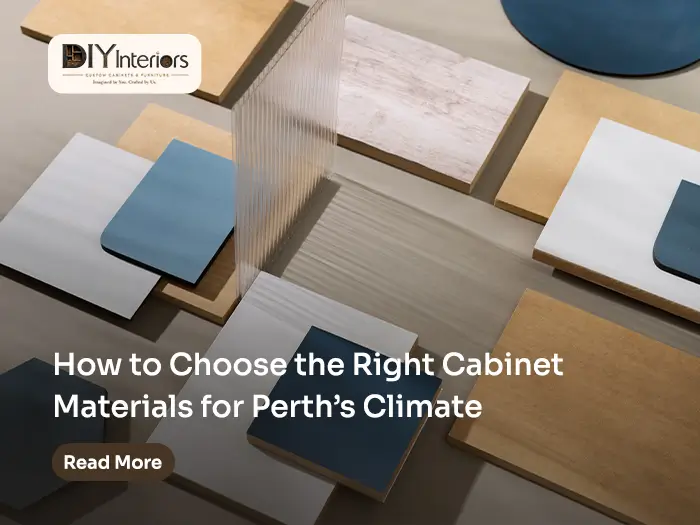
Choosing cabinets is not only about colour, storage and style. The material beneath the finish determines how well your cabinetry handles heat, moisture, sunlight and everyday use. Perth’s hot summers, cooler wet winters and coastal conditions can place extra pressure on cabinets. Materials that perform well in a dry bedroom may not be suitable for a bathroom, laundry or outdoor kitchen. This guide explains how to choose the right cabinet materials for Perth’s climate, helping you create cabinetry that looks good, works well and lasts longer.
Understanding Perth’s Climate
Perth has long, hot and mostly dry summers, followed by cooler and wetter winters. According to the Bureau of Meteorology’s Perth climate statistics, the city experiences its highest average temperatures during summer, while most rainfall occurs during the cooler months. Strong sunlight is common throughout the year, while homes near the coast may also experience higher humidity and salt-laden air.
Inside the home, cabinets face additional challenges from cooking heat, steam, plumbing leaks and regular cleaning. For this reason, the best cabinet materials for Perth homes should suit both the local climate and the conditions within each room.
How Perth’s Climate Affects Cabinets
Perth’s intense heat and strong sunlight can gradually damage cabinet finishes, causing them to fade, crack or peel. Vinyl-wrapped doors are especially at risk when they are positioned near ovens, kettles or windows that receive direct afternoon sunlight.
Moisture is another concern. Water can enter poorly sealed edges around sinks, dishwashers and bathroom basins. MDF and particleboard may swell once their inner core absorbs water, making the damage difficult to repair.
Natural timber can also expand or contract as temperature and humidity levels change. In coastal suburbs, salty air may cause low-quality hinges, handles and metal fittings to corrode more quickly.
Choosing suitable materials is important, but good installation, proper edge sealing and adequate ventilation are equally necessary.
Factors to Consider When Choosing Cabinet Materials
Moisture Resistance
Moisture resistance should be a priority in kitchens, bathrooms, laundries and outdoor entertaining areas. Look for boards designed for humid conditions and ensure that cut edges, joints and plumbing holes are properly sealed.
Keep in mind that moisture-resistant cabinets are not always waterproof. Long-term leaks or standing water can still damage the material.
Heat Resistance
Cabinets installed near ovens, cooktops, kettles and barbecues need materials and finishes that can tolerate heat. Appropriate ventilation, appliance clearances and heat shields can reduce the risk of peeling, bubbling and discolouration.
Durability and Strength
Think about how often the cabinets will be used and what they will hold. A busy family kitchen needs stronger boards, hinges and drawer runners than a lightly used guest-room wardrobe.
Durable cabinetry should resist dents, scratches and movement while providing enough strength for heavy cookware, appliances and stored items.
Maintenance Requirements
Laminate, melamine and acrylic finishes are generally easy to clean. Natural timber and timber veneer may require more careful maintenance and occasional refinishing.
Choose a material that suits your lifestyle. A beautiful finish may not be practical if it requires more upkeep than you can provide.
Budget
The cheapest cabinet material is not always the most affordable option over time. A low-cost board may need earlier replacement if it is installed in a wet or heavily used area. Homeowners working with a limited budget can also explore flat pack cabinet solutions that balance affordability, functionality and design flexibility.
Your budget should account for the cabinet board, door finish, edging, hardware, installation and future maintenance.
Style and Finish
The cabinet material must support the appearance you want. MDF is suitable for smooth painted and routed doors, while plywood and timber veneer work well in natural or contemporary designs. Laminate and melamine offer a wide range of colours, patterns and textures.
Best Cabinet Materials for Perth Homes
| Material | Best Feature | Suitable Areas | Main Consideration |
|---|---|---|---|
| Plywood | Strong and stable | Kitchens, bathrooms and laundries | Higher cost than standard boards |
| Moisture-Resistant MDF | Smooth painted finish | Painted cabinet doors and humid indoor areas | not waterproof; all cut edges must be sealed |
| Solid Timber | Natural and repairable | Premium and feature cabinetry | May expand or contract |
| Laminated Particleboard | Affordable and versatile | Wardrobes and dry areas | Can swell after water exposure |
| Thermofoil | Smooth and easy to clean | Indoor cabinet doors | Sensitive to heat |
| Marine-Grade Plywood | Strong moisture resistance | Outdoor and high-moisture areas | Requires protective finishing |
Plywood
Plywood is made from several layers of timber veneer bonded together. Its layered structure provides strength, stability and good screw-holding ability.
It is a reliable choice for kitchen cabinet boxes, bathroom vanities and laundry storage. However, plywood is not completely waterproof, so exposed edges still need to be sealed.
Moisture-Resistant MDF
Moisture-resistant MDF provides a smooth, consistent surface for painted, routed and two-pack cabinet doors. It is commonly used where homeowners want a clean and customised finish.
When comparing MDF vs plywood cabinets, plywood is generally stronger and more moisture-tolerant. MDF is often more affordable and provides a smoother surface for paint.
Solid Timber
Solid timber adds warmth and character to a room. It can be sanded, repaired and refinished, which may extend its useful life.
Because timber is a natural material, it can move when temperature and humidity change. Proper seasoning, sealing and professional installation help reduce warping, cracking and door misalignment.
Particleboard With Laminate Finish
Laminated particleboard is one of the most affordable cabinet materials in Australia. It is available in many colours and textures and works well in wardrobes, entertainment units and other dry indoor areas.
Its main weakness is the inner core. If water enters through an exposed or damaged edge, the board may swell and lose its shape.
Vinyl-Wrapped or Thermofoil Cabinets
Vinyl wrap also known as thermofoil, is applied over an MDF door to create a smooth, seamless finish. It is easy to clean and available in many door profiles.
However, heat can weaken the adhesive. Thermofoil should not be installed too close to ovens, cooktops, kettles or windows with strong direct sunlight.
Marine-Grade Plywood
Marine-grade plywood uses water-resistant adhesive and carefully selected veneer layers. It is a practical option for outdoor kitchens, coastal homes and areas with a higher risk of moisture exposure.
It still needs sealed edges, an exterior-rated finish and protection from standing water.
Choosing the Right Material for Different Spaces
Kitchen
For durable kitchen cabinets in Perth, plywood and moisture-resistant MDF are practical choices. Extra care is needed around sinks, dishwashers, ovens and plumbing connections. Experienced kitchen cabinet makers in Perth may use different materials for cabinet boxes, doors and sink units to balance cost, appearance and durability.
Bathroom
Bathroom cabinetry needs moisture-resistant materials, sealed joints and good ventilation. Plywood, moisture-resistant MDF and marine-grade plywood may all be suitable, depending on how close the cabinets are to showers, basins and wet floors. Professionally designed bathroom vanities and laundry cabinets should also include properly sealed edges and durable hardware to reduce the risk of swelling, corrosion and long-term moisture damage.
Laundry
Laundry cabinets are exposed to humidity, detergents and possible plumbing leaks. Plywood or moisture-resistant MDF is generally safer than standard particleboard. Raising cabinets slightly above the floor can also protect them from minor leaks.
Wardrobes and Living Areas
Wardrobes and living-room cabinets are generally exposed to less moisture than kitchens and bathrooms. MDF, melamine-faced particleboard, plywood and timber veneer can all perform well in these spaces.
Professionally designed custom wardrobes and overhead cabinets can maximise available storage while matching the style and layout of the room. In spaces with large windows, consider UV-resistant finishes to help reduce fading and discolouration.
Outdoor Kitchen
Outdoor cabinets must handle sunlight, moisture, heat and changing temperatures. Marine-grade plywood, stainless steel, aluminium and exterior compact laminate are suitable choices.
Well-designed alfresco and outdoor cabinets should also include corrosion-resistant hardware, sealed edges and finishes suited to Perth’s outdoor conditions. Standard MDF and particleboard should generally be avoided outdoors, even when covered with a decorative finish.
Best Cabinet Finishes for Perth Homes
High-Pressure Laminate
High-pressure laminate is durable, easy to clean and available in many colours and textures. It is a practical finish for busy kitchens and laundries.
Two-Pack Polyurethane
Two-pack polyurethane creates a smooth painted finish and can be customised in different colours and sheen levels. It offers a premium appearance but may chip after a heavy impact.
Acrylic Finish
Acrylic provides a glossy, modern surface with good colour consistency. It is easy to clean, although darker colours may show fingerprints and scratches.
Timber Veneer
Timber veneer offers the appearance of natural wood with more consistency than many solid timber doors. It should be sealed and protected from prolonged direct sunlight.
Melamine
Melamine is affordable, low-maintenance and available in a wide range of finishes. Its performance depends heavily on the quality of the board, edging and installation.
Common Mistakes to Avoid
One of the most common mistakes is choosing cabinet materials based only on price. Homeowners may also use standard MDF in wet areas, leave cut edges unsealed or install vinyl wrap too close to heat.
Using indoor-grade cabinetry outdoors, ignoring bathroom ventilation and assuming moisture-resistant means waterproof can also reduce the life of your cabinets. Even premium materials may fail when low-quality hardware or poor installation methods are used.
Conclusion
The right cabinet material depends on where it will be used, how much moisture it may face, your budget, and the finish you prefer. Plywood and moisture-resistant MDF work well for most indoor spaces. In contrast, marine-grade plywood and other exterior-rated materials are better choices for outdoor areas or places exposed to more moisture and weather.
Using different materials for cabinet boxes, doors, wet-area units and appliance sections can deliver better performance without unnecessary costs.
DIY Interiors offers practical options for homeowners planning custom kitchen cabinets in Perth. Explore suitable materials, finishes and cabinetry solutions for your home at diyinteriors.com.au.
FAQs
What is the best cabinet material for Perth’s climate?
Plywood is one of the most versatile options because it provides good strength, stability and moisture resistance. Moisture-resistant MDF is also suitable for painted indoor cabinetry when its edges are properly sealed.
Is MDF or particleboard better for Perth weather?
Moisture-resistant MDF is generally better for kitchens, bathrooms and laundries. Laminated particleboard can work in dry areas but may swell if water reaches its inner core.
Why are my vinyl wrap cabinets peeling?
Vinyl wrap cabinets may peel because of heat, steam, direct sunlight, ageing adhesive or poor installation. Doors near ovens, kettles and cooktops are particularly vulnerable.
What are the best outdoor kitchen cabinets for Perth?
Marine-grade plywood, stainless steel, aluminium and exterior compact laminate are suitable options. The final choice depends on whether the kitchen is fully covered, partially exposed or close to the coast.
What are the best materials for outdoor cabinets?
Choose exterior-rated materials that resist moisture, UV exposure, heat and corrosion. Standard MDF and particleboard are generally unsuitable for outdoor cabinetry.